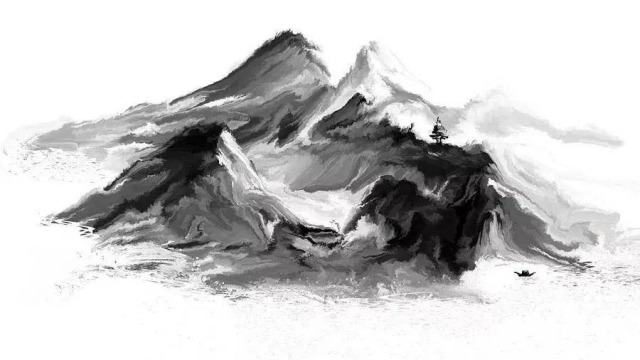
The height measurement of Mount Everest was completed on May 27, 2020. This is China’s seventh large-scale measurement of Mount Everest . However , humans have not stopped exploring Mount Everest for a moment. Looking up at the highest peak on earth, surveyors and surveyors continue to refresh the height given by them.
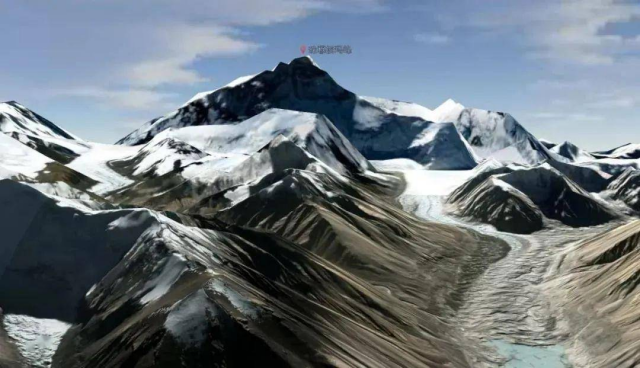
Everest 3D model @LS
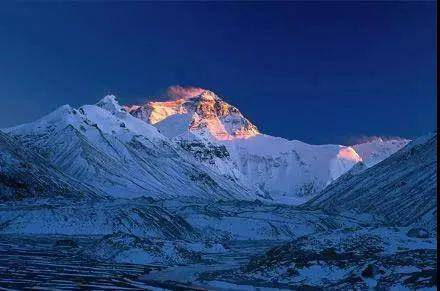
Everest @Tibet Travel
Qomolangma (Tibetan: ཇོ་མོ་གླང་མ), Tibetan transliteration. Zhumu means goddess, and there are different opinions on Langma. It is generally considered to be the abbreviation of "Miyu Losangma", the third goddess of chastity and wisdom who lives on this peak among the five longevity goddesses in Tibetan Buddhist legend. Together, it means "the third goddess". .
The "Lotus Relics" unearthed in 1258, the Everest area is called "Laqi", and the first comprehensive general history of Tibetan history "Red History" written in 1363 is also called "Laqi". In 1717, surveyors from the Qing Dynasty surveyed and mapped the Mount Everest area and marked "Zumlang Ma'alin" on the "Royal Panoramic Map". "Alin" is Manchu, meaning "mountain".
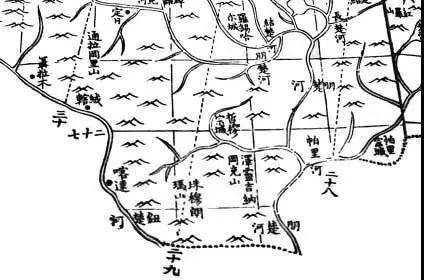
Mount Everest marked in the "Imperial Map" @ChinaTibet.com
In 1952, the Chinese government changed its name to Mount Everest, based on the original Qing court survey map reviewed by Chinese geographer Wang Juhou at the Palace Museum, which proved that the location of Mount Everest was clear and correct, and "Everest" was indeed the original name of the world's highest peak. . According to various historical data, Mount Everest was the first to be discovered and measured in my country.
■ History of Mount Everest Measurement
How high Mount Everest is has always attracted the attention of the world. Since 1714, humans have conducted many measurements on Mount Everest for more than 300 years. As the top of the earth, the extremely harsh environment poses great challenges to the measurement work.
The entire mountain of Mount Everest is in the shape of a giant pyramid , with its head raised high into the sky. The surrounding terrain is extremely steep and the weather changes rapidly. Between the ridges and cliffs, there are hundreds of large and small glaciers. On the glaciers, there are various, magnificent and rare forests of seracs, ice cliffs tens of meters high, and bright and dark ice fissures with traps. There are also dangers everywhere. avalanche zone.
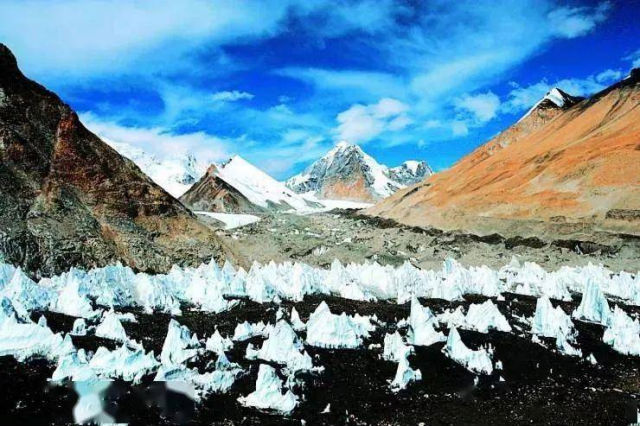
Rongbuk Glacier @China National Geographic
In 1714, the chief ministers of the Qing Dynasty, Shengjian, Lama Chugqin Zangbo and Lhamo Zamba, were appointed by the central government to go directly to the foot of Mount Everest. They used the longitude and latitude mapping method and the trapezoidal projection method to determine the location of Mount Everest. A preliminary measurement was made of the height and height, and annotations were made on the "Overview Map of the Imperial Palace" drawn.
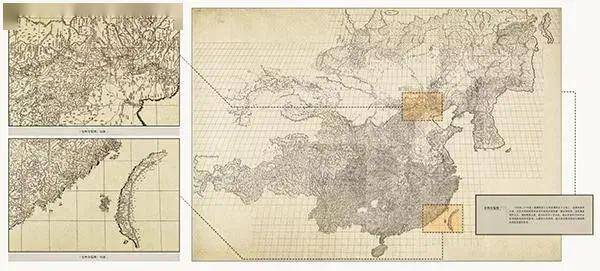
"Comprehensive Map of the Imperial Palace" @China Surveying and Mapping Science and Technology Museum
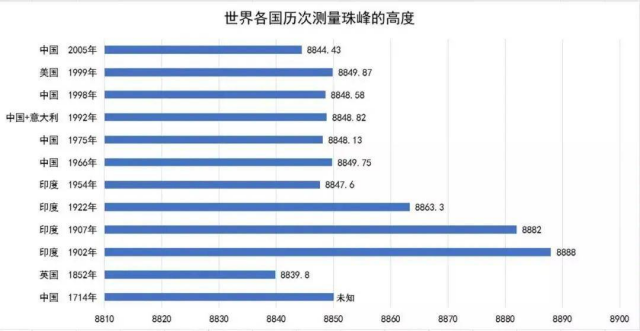
In the mid-19th century, a survey team led by Andrew Wolfe set out from the Indian plains toward the Himalayas and conducted long-distance measurements hundreds of kilometers away from Mount Everest. In 1852, Andrew announced that the height of Mount Everest was 8,839.8 meters. However, neither the vertical deviation of the observation station nor the difference between the ellipsoid elevation and the geoid was considered in this calculation. At that time, there was no joint level measurement at each observation station.
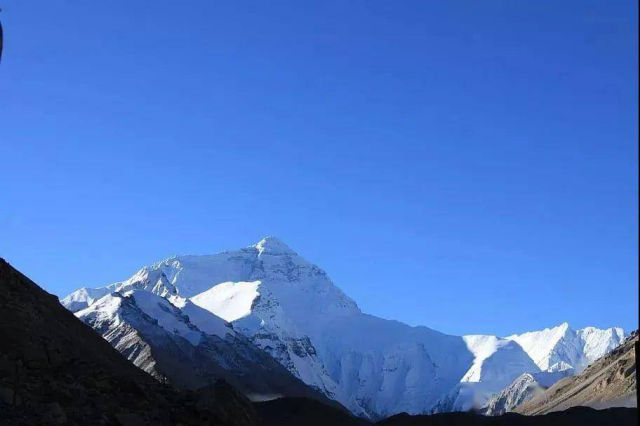
Everest @Piqsels
In the following decades, Indian surveying and mapping successively conducted many measurements on Mount Everest. Due to large errors caused by atmospheric refraction, seasonal characteristics of snow cover on the top of the mountain, vertical deviation, and datum levels, the official values are still based on the original notes of Andrew . Wolfe's elevation is 8840m. From 1952 to 1954, the Survey Bureau of India obtained the consent of Nepal and advanced triangulation to Nepal, and more accurately measured the altitude of Mount Everest. The final measurement result was 8848m. Although factors such as atmospheric refraction are taken into account, actual gravity measurements are lacking, and the intersection is still performed on the top of the mountain instead of the measurement target.
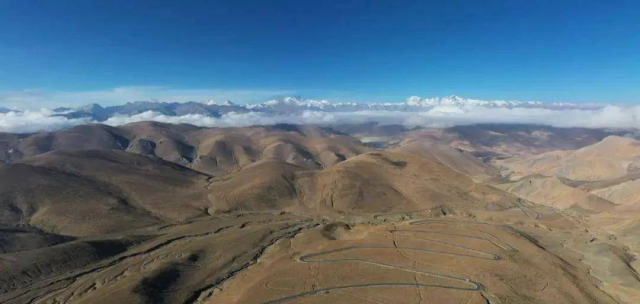
Everest @720Cloud
China, alone or in cooperation with international partners , conducted five large-scale geodetic survey field operations, data processing and corresponding research work on the height of Mount Everest in 1966, 1975, 1992, 1998 and 2005, including Projects such as astronomy, gravity, trigonometry, GPS positioning, elevation, and atmospheric refraction use both conventional technology and GPS positioning technology since 1992.
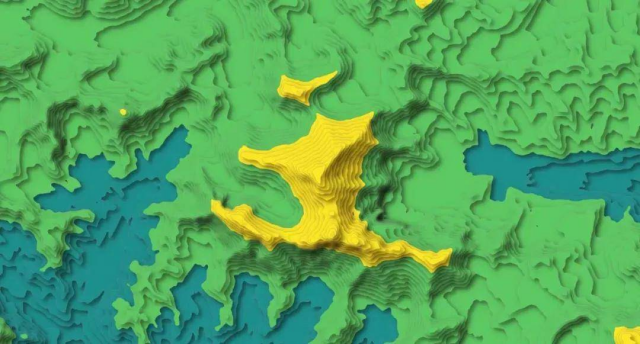
Mount Everest three-dimensional terraced contour renderings @张云金
From 1958 to 1960, during the Mount Everest mountaineering scientific expedition, surveying and mapping workers measured the baseline in the open area of the Rongbuk Temple Valley, measured the elevation of the end hills of the baseline using a mercury barometer and conducted astronomical observations. They obtained the height of Mount Everest at 8,882 meters. But this height is inaccurate, and there is a large error in the mercury barometer measurement.
In 1966, Chinese surveying and mapping workers conducted on-site measurements of Mount Everest for the first time.
From 1966 to 1968, the measurement datum control network in the Everest area was completed and successfully reached the top of Mount Everest. A total of 39 survey intersection points were deployed. The height of the measurement station was 5700-6242 meters. The highest level point was 6120 meters. It was the closest triangular point to Mount Everest. 8.5 kilometers away, the horizontal point is 14 kilometers away from Mount Everest, the gravity point is 4 kilometers away, and the astronomical point is 10 kilometers away. After refraction correction and vertical deviation correction, the final calculated altitude of Mount Everest is 8849.75m (without taking into account the snow thickness on the summit), and the maximum mutual difference is 3.01m. However, during these two measurements, no measurement target was erected on the peak, nor was the ice and snow thickness on the peak measured, and the elevation was not announced.
On July 23, 1975, the Chinese government authorized Xinhua News Agency to announce to the world that Chinese surveying and mapping workers had accurately measured the altitude of Mount Everest, the world's highest peak, to be 8848.13 meters above sea level.
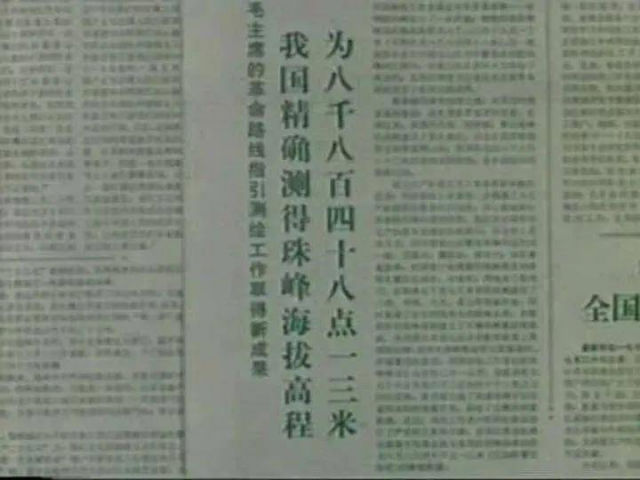
People’s Daily reported on July 23, 1975@baidu
In 1975, my country officially measured the altitude of Mount Everest for the first time. This measurement is also the most comprehensive, scientific and accurate measurement of the altitude of Mount Everest using traditional geodetic methods in human history. This survey included geodetic techniques such as astronomy, trigonometry, leveling, gravity, and triangular elevation in the Everest area. In addition, high-altitude detection balloons were also used to actually measure meteorological elements, and factors such as atmospheric refraction and snow cover on the mountain top were studied and analyzed. All things considered.
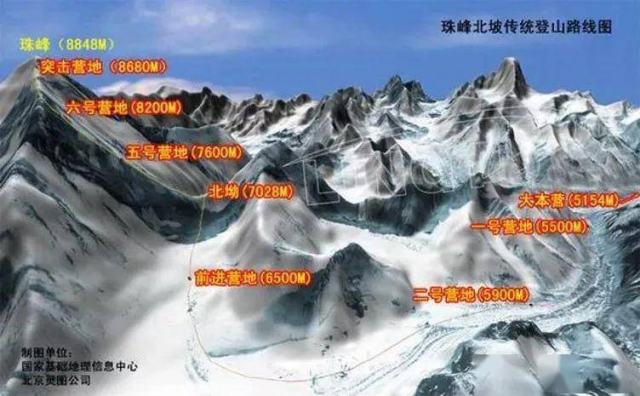
Traditional climbing route map of the north slope of Mount Everest @baidu
Before the 1980s, our country, like other countries, mainly used trigonometric height measurement technology to measure the height of Mount Everest. In 1975, a measurement target was established on the top of the peak, so that the sighting error was very small when observing the target. This is the world's For the first time in history, the height of Mount Everest was measured.
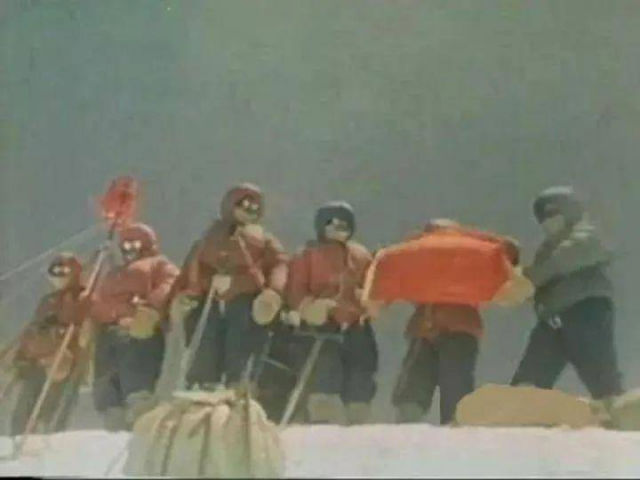
A 3.52-meter-high sighting mark was erected on the top of Mount Everest @baidu
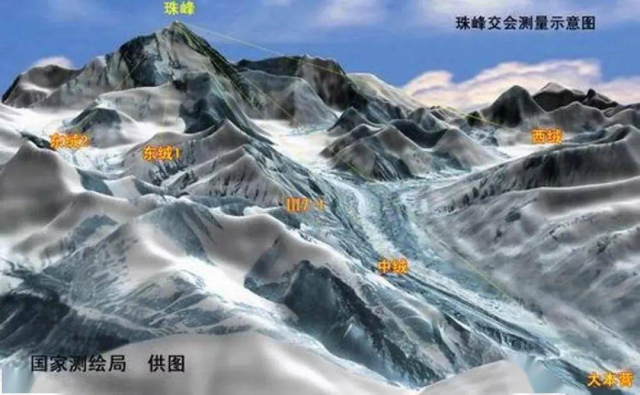
Everest rendezvous measurement diagram @baidu
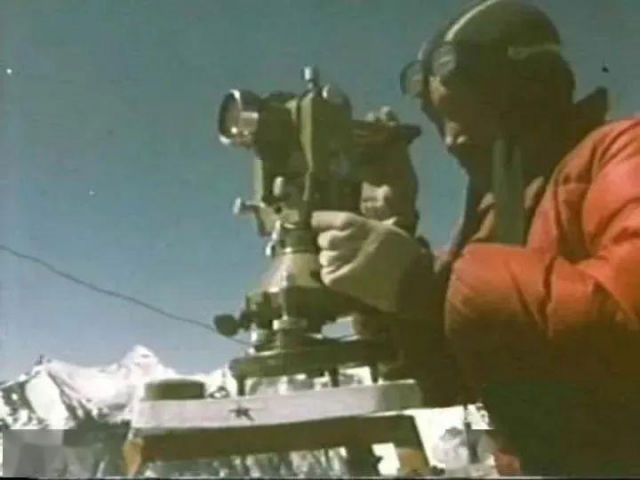
Use Wild T3 theodolite to observe vertical angles@baidu
After this measurement, the triangulation points and conductor points extended to an average of 10 to 15 kilometers from the top of Mount Everest, and the elevations of the points were all above 5,600 meters. The gravity point was measured at 7,790 meters, 1.9 kilometers from the top of Mount Everest. It was the highest gravity point in the world at that time. The astronomical point was observed at 6336 meters, 5 kilometers from the top of Mount Everest. The nine measuring stations selected from the vicinity of Mount Everest are distributed in a 69-degree fan-shaped area centered on Mount Everest. The distance to Mount Everest is 8.5 to 21.2 kilometers, and the altitude is 5,600 to 6,240 meters. The surveying and mapping team members observed the horizontal and vertical angles of the Everest target at nine surveying stations. The horizontal position of Mount Everest and the horizontal distance from each measuring station to Mount Everest are determined based on the horizontal angle. According to the principle of trigonometric height measurement, these vertical angles and horizontal distances are used to determine the height difference between each measuring station and Mount Everest, and then the height of Mount Everest calculated from the mean sea level of the Yellow Sea in my country is derived. The final calculated elevation is 8848.13m (the depth of snow cover at the center of the peak is approximately 0.92m), with a medium error of ±0.35m.
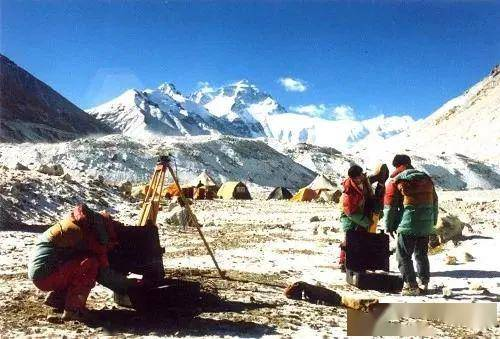
1998 re-measurement of Mount Everest@Ministry of Natural Resources
In the more than 30 years since 1975, my country has used GPS technology in 1992, 1998 and 1999, combined with conventional geodetic methods, to conduct multiple elevation measurements of Mount Everest in the Everest region, either alone or through international cooperation.
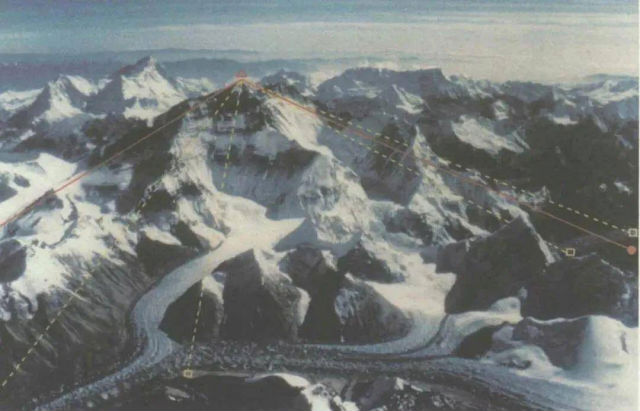
Everest rendezvous diagram @[1]
During the re-measurement of the height of Mount Everest in 1992, Chinese surveying and mapping workers buried the basic leveling points at the foot of Mount Everest for the first time: for the first time, they fired beams of lasers at the top of the earth and directly measured the data; for the first time, Global Positioning System (GPS) receivers are used for surveying and mapping Mount Everest.
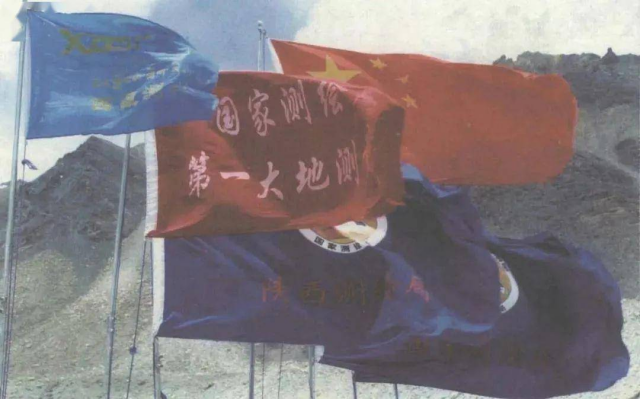
In 2005, the flag of the surveying and mapping team at Mount Everest Base Camp@[1]
In 2005, the People's Government of the Tibet Autonomous Region, the Chinese Academy of Sciences, and the National Bureau of Surveying and Mapping organized a large-scale campaign to re-climb Mount Everest, conduct another comprehensive scientific survey of the Everest area, and re-accurately measure the height of Mount Everest.
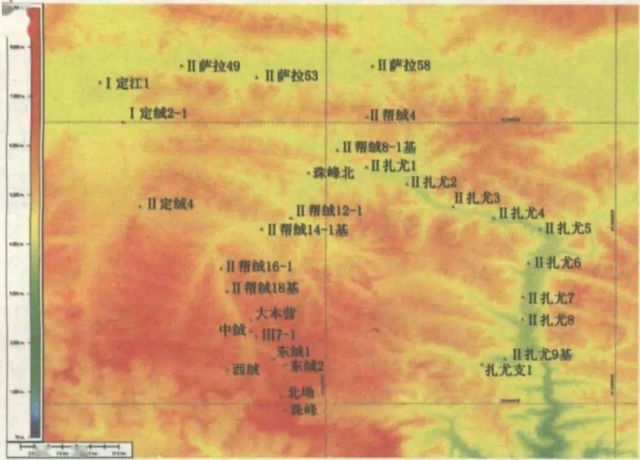
Distribution map of GPS measurement points of Mount Everest measurement in 2005@[1]
This re-measurement of the height of Mount Everest adopted both traditional and classic measurement methods as well as modern advanced measurement technology. With the assistance of mountaineering team members, measurement professionals carried dual-frequency GPS satellite navigation locators and ice and snow radar detectors to the summit. , on Mt. The GPS measurement and detection of the ice and snow depth on the peak were carried out on the peak. It was also the first time that the mysterious ice and snow thickness on the peak was revealed. At the same time, a 2.5m-high red target specially made of aerospace materials was erected on the peak to serve as the intersection of six observation stations. Sight target at the summit of Mount Everest.
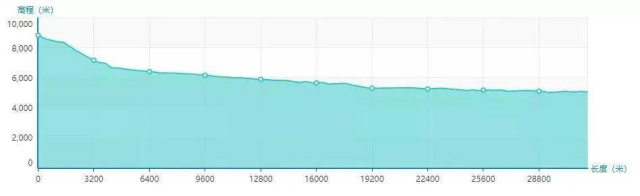
A sketch of the distance and altitude changes from base camp to the summit
The result of this Mount Everest elevation measurement is : the altitude of the rock face at the top of Mount Everest is 8844.43 meters. The relevant parameters are: the elevation measurement accuracy of the rock surface of Mount Everest is ±0.21 meters; the depth of ice and snow on the peak is 3.50 meters. This is the most accurate and reliable Everest elevation data to date.
Human beings have never stopped exploring Mount Everest. Looking up at the highest peak on earth, surveyors continue to give the height of Mount Everest. And she has always been there, encouraging more people to climb and find more precise heights!
References
[1]Xu Yongqing. Reaching the Summit: Measurement Notes on Mount Everest[M]. Beijing: Social Sciences Literature Press, 2010
[2] Chen Junyong, Pang Shangyi, Zhang Ji, et al. Thoughts on my country’s 35-year elevation measurement results of Mount Everest [J]. Journal of Surveying and Mapping, 2001(01):3-7.
[3]Chang Jiqing. Brief introduction to previous elevation measurements of Mount Everest[J]. Bulletin of Surveying and Mapping, 2005(10):5-9.
[4] Guo Chunxi, Wang Bin, Cheng Chuanlu, et al. Elevation measurement of Mount Everest [J]. Journal of Earth Science and Environment, 2009(01):110-114.
[5] Everest Dictionary[J]. 2005.
[6] Dang Yamin, Cheng Chuanlu, Chen Junyong, et al. 2005 Mount Everest height measurement GPS measurement and data processing [J]. Journal of Wuhan University·Information Science Edition, 2006, 31(4): 297-300.
[7] On May 8, 1952, Mount Everest was renamed[J]. Trade Union Information, 2016(14):29-29.
[8] Zhang Yunjin. Sharing version of QGIS Getting Started Guide [M].